 | |||||||||||||
jueves, 25 de noviembre de 2021
Updates to our Terms of Service and Privacy Policy

jueves, 15 de agosto de 2019
Updates to our Terms of Service and Privacy Policy
| ||||||||||||||||||

sábado, 17 de diciembre de 2016
Updates to our Terms of Service and Privacy Policy
| ||||||||||||||||||

martes, 5 de mayo de 2015
Update: Changes to better serve our users around the world
| ||||||||||||||||||

lunes, 25 de junio de 2012
Siembra de la explanada 2 pasto Brachiaria Dictonera ( Cultivar Llanero )


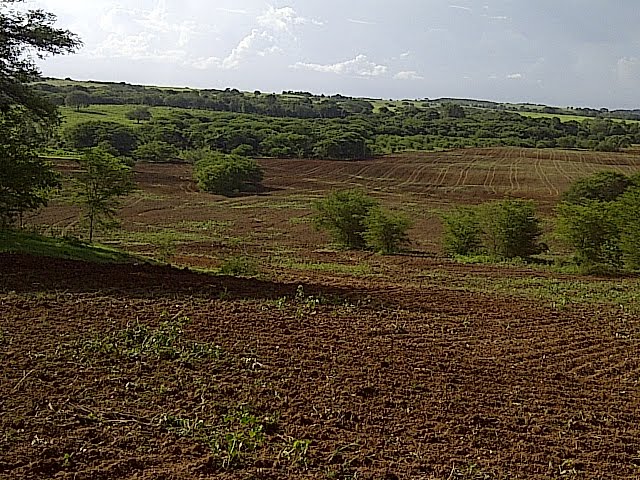


Siembra de la explanada 2 pasto Brachiaria Dictonera ( Cultivar Llanero )
martes, 12 de junio de 2012
Cheese Cultures
Recent advances in cheese microbiology
http://comenius.susqu.edu/biol/312/recentadvancesincheesemicrobiology.pdf
Open Traditional cheese Vat
http://www.schuller.us/Cheese-vats-Traditional.html


| Product:
Cheese Vat Traditional |
This cheese vat is triple walled
and has an insulated outer wall.
Hot or cold water can circulate
in the jacket of the vat. This is
done by means of a spray pipe
for indirectly cooling or heating
the product.
The machine comes standard
fitted with a built-in thermostat
control with a integrated digital
temperature display.
and has an insulated outer wall.
Hot or cold water can circulate
in the jacket of the vat. This is
done by means of a spray pipe
for indirectly cooling or heating
the product.
The machine comes standard
fitted with a built-in thermostat
control with a integrated digital
temperature display.
The Ceres IV/VI stirring machine of
the
round cheese vat is provided with a motor
reductor, stainless steel stirring mechanism
and stainless steel control panel. A
frequency convertor is used to control the
cutting/stirring speed.
The speed is adjustable between the 0 and
25 rotations per minute.
The machine also contains an automatic
curd cutting programm.
round cheese vat is provided with a motor
reductor, stainless steel stirring mechanism
and stainless steel control panel. A
frequency convertor is used to control the
cutting/stirring speed.
The speed is adjustable between the 0 and
25 rotations per minute.
The machine also contains an automatic
curd cutting programm.
The machine is mounted on
wheels and comes with either a
manually operated tipping
mechanism (with an eccentric
wheel) or a pneumatic tipping
mechanism (cylinder operated)
wheels and comes with either a
manually operated tipping
mechanism (with an eccentric
wheel) or a pneumatic tipping
mechanism (cylinder operated)

Open Top Cheese Vats
http://www.sycamoreprocessengineering.co.uk/default.aspx?page=fabrication/cheesevats

Our vats can come supplied either with single or double cavity depending on budget. Single cavity provides a 50mm water filled heating jacket on the bottom surface and sides. When steam is injected into the base of the jacket via a specially designed sparge arm, the heat is uniformly dissipated around the vat. A second external cavity if chosen provides 30mm of insulation to retain heat within the vat during the scalding process.


Open Top Cheese Vats
Our open top vats are designed to accommodate capacities ranging from 500Ltr through to 5000Ltr. The sample illustrated shows a 1500Ltr round vat. Vats required for larger capacities are usually supplied using the double 'O' configuration utilising twin cutting and stirring mechanisms. Our vats are made completely from stainless steel with all internal welds ground and polished for optimum hygienic cheese making conditions.Our vats can come supplied either with single or double cavity depending on budget. Single cavity provides a 50mm water filled heating jacket on the bottom surface and sides. When steam is injected into the base of the jacket via a specially designed sparge arm, the heat is uniformly dissipated around the vat. A second external cavity if chosen provides 30mm of insulation to retain heat within the vat during the scalding process.
Specifications
- 500 to 5000 Ltr capacity round or double 'O'
- Quickly removable stirrer/cutting frames
- Reversible motor for clockwise stirring and anti-clockwise cutting
- Variable speed motor for optimum stirrer/cutting speeds
- Fully polished on all product contact surfaces
- Self-draining base or automated pneumatic lift
- Adjustable feet +/- 25mm
- Removable outlet grill/mesh for fines collection
- Hygienically integrated control housing
- Double safe lip seal on motor drive shaft
- Steam heating
Optional
- Digital temperature display providing automated thermostatic on/off steam control
- PLC control for automated stirring/cutting adjustable time parameters
- Second insulated 30mm cavity
- Under housing hygienic lighting

miércoles, 9 de mayo de 2012
Fwd: Cotización Filtros Pasteur
---------- Forwarded message ----------
From: Purificadores Marilagua A7 <ventaspasteur@hotmail.com>
Date: 2012/5/8
Subject: Cotización Filtros Pasteur
To: cayalaaa@gmail.com
From: Purificadores Marilagua A7 <ventaspasteur@hotmail.com>
Date: 2012/5/8
Subject: Cotización Filtros Pasteur
To: cayalaaa@gmail.com
Buenas Tardes
Adjunto cotización del Filtro e Hidroneumatico con sus imagines.
Att.
Yolimar Serrano
Secretaria de Ventas
Purificadores Marilagua A7, C.A.
Tlf.: 9538794/9512097
Correo: ventaspasteur@hotmail.com
Direccion: Av. Tamanaco Edificio Galipan PB, local T7-C, El Rosal
Secretaria de Ventas
Purificadores Marilagua A7, C.A.
Tlf.: 9538794/9512097
Correo: ventaspasteur@hotmail.com
Direccion: Av. Tamanaco Edificio Galipan PB, local T7-C, El Rosal
--
Carlos Ayala
ParkingCorp
0414 2798363
lunes, 7 de mayo de 2012

Fwd: Calculo de SubAreas de Potreros Rastreados 2012 Invierno


---------- Forwarded message ----------
From: Carlos Ayala <cayalaaa@gmail.com>
Date: 2012/5/7
Subject: Calculo de SubAreas de Potreros Rastreados 2012 Invierno
To: diego henrique ayala contasti <dayala53@gmail.com>, diego henrique ayala contasti <dayala53@googlemail.com>, Carlos Ayala <cayalaaa@gmail.com>
Cc: Highrise Dropbox <dropbox@87298096.muccabella.highrisehq.com>
--
From: Carlos Ayala <cayalaaa@gmail.com>
Date: 2012/5/7
Subject: Calculo de SubAreas de Potreros Rastreados 2012 Invierno
To: diego henrique ayala contasti <dayala53@gmail.com>, diego henrique ayala contasti <dayala53@googlemail.com>, Carlos Ayala <cayalaaa@gmail.com>
Cc: Highrise Dropbox <dropbox@87298096.muccabella.highrisehq.com>
--
Carlos Ayala
ParkingCorp
0414 2798363
--
Carlos Ayala
ParkingCorp
0414 2798363
martes, 15 de noviembre de 2011
Techo de Anime Termolosa 4 cm de vaciado de cemento
http://www.grupoisotex.com/TERMOLOCK.pdf

http://www.grupoisotex.com/Productos/Sistemas%20Constructivos/Manual%20TERMOLOSA%20C.pdf

http://www.grupoisotex.com/teja%20recha1.pdf
http://www.grupoisotex.com/manual%20termopanel.pdf

http://www.grupoisotex.com/ISOPANEL.pdf
--
Carlos Ayala
ParkingCorp
0414 2798363
lunes, 3 de octubre de 2011
Brachiaria Brizantha Toledo
Brachiaria brizantha
Scientific name
Brachiaria brizantha (Hochst. ex A. Rich.) Stapf.
Synonyms
Urochloa brizantha (Hochst. ex A. Rich.) R.D. Webster
Panicum brizanthum Hochst. ex A.Rich. [basionym]
Family/tribe
Family: Poaceae (alt. Gramineae) subfamily:
Panicoideae tribe: Paniceae.
Common names
beard grass, palisade grass, palisade signal grass, Mauritius grass (Malaysia); signal grass ,
Palisadengras (German); brizantha, braquiarão, brizantão, capim braquiária, capim marandú,
marandú, capim ocinde (Portuguese - Brazil); pasto alambre, pasto señal, zacate señal,
zacate signal (Spanish).
Morphological description
Loosely tufted perennial with short rhizomes and erect or slightly decumbent stems 60–150 cm high (occasionally to 200 cm). Leaves flat, bright green up to 20 mm wide and up to 100 cm long. May be hairless or hairy. Inflorescence is a racemose panicle consisting of 2–16 racemes, 4–20 cm long and elliptical spikelets 4–6 mm long, with no hairs or a few hairs at the tip. Spikelets are normally a single row, with a purple, crescent-shaped rachis 1 mm wide. Glumes and lower lemma are cartilaginous in texture.B. brizantha intergrades with Brachiaria decumbens and the species may be difficult to distinguish. The main difference is in growth habit with B. brizantha more tufted and B. decumbens more decumbent and forming a denser cover. The two are morphologically distinguished by the
shape of the rachis and the arrangement and texture of spikelets.
Distribution
Native to:
Africa: Botswana, Cameroon, Côte D'Ivoire, Ethiopia,
Ghana, Guinea, Kenya, Malawi, Mozambique, Namibia, Nigeria, Sierra Leone, South
Africa, Tanzania, Uganda, Zaire, Zambia, Zimbabwe.
Sub-Saharan Africa from
25ºS to 12ºN, from 100–2,300 m asl .
Widely naturalised throughout the humid and sub-humid tropics.
Uses/applications
Permanent pasture for grazing and cutting for fresh feed and for conservation . Multi-purpose pastures including fattening systems. Suitable for establishment with upland rice
(Oryza sativa) in the Colombian savannas. It is also planted as a pasture under plantation crops and as a ground cover for erosion control.
Ecology
Soil requirements
Grows on a wide range of soils with pH 4–8, textures ranging from light to heavy (but
free-draining) and fertility from high to low, including those of acidic soils with high soluble Al concentrations. Tolerance to Mn varies among accessions. Will show a minor response to lime on acid soils. Generally needs medium to high soil fertility to be productive. More nutritionally demanding than other Brachiaria species.
Moisture
Best adapted to the humid and sub-humid tropics with 1,500–3,500 mm AAR, but will
also grow in the more arid regions of the tropics with rainfall somewhat below 1,000 mm. Can withstand dry seasons of 3–6 months during which the leaf may remain green while other tropical species have browned off. Less adapted than either B. humidicola or B. dictyoneura to short dry periods (3 months) or to wet soils. Reports of tolerance to flooding are varied. ‘Toledo’ can stand short-term flooding (1 month), ‘Marandú’ has little tolerance.
Temperature
B. brizantha is a warm-season grass for the lowlands, altitudes to 2,000 m in the tropics but only to 1,000 m in higher latitudes. Leaf is frost-sensitive, but the plant survives light frost.
Light
Shade tolerance is intermediate compared with other tropical grasses; productive under moderate light intensities of more open plantations of coconuts (60% light transmission). Cv. Marandú was the most productive grass under mature (12-year) rubber. At low N inputs, DM yields have been higher in shade than in full sunlight.
Reproductive development
The species is predominantly polyploid and apomictic. Diploid sexual accessions are known, but have no commercial value.
Defoliation
Can tolerate frequent defoliation under grazing or cutting. Cvv. Marandú and Karanga are tall and so easier to cut by hand.
Fire
Burning is not recommended but will recover from an occasional, but not annual , fire.
Agronomy
Guidelines for the establishment and management of sown pastures.
Establishment
Large areas are established from seed. Fresh seed will not germinate due to physiological dormancy and must be stored for 6–9 months or acid-scarified before sowing. Seed should be broadcast at 2–4 kg/ha onto a well-prepared seedbed and then lightly harrowed and rolled to incorporate. Mixtures with legumes are commonly planted. In the wetlands of the Brazilian savannas, planting early in the rainy season results in the loss of seedlings through flooding, so late planting is more suitable. Smallholders establish B. brizantha vegetatively from rooted tillers.
Fertiliser
Very responsive to fertiliser N, and may require repeated moderate applications. In cut-and carry systems, fertiliser should be applied after each cut for maximum production.
Compatibility (with other species)
Lightly grazed B. brizantha provides good ground cover and weed control. Under light grazing, many twining legumes will persist in the sward (better than with other commercial species of Brachiaria). Creeping legumes such as Arachis spp. and Desmodium
heterocarpon subsp. ovalifolium will combine well under more intense grazing. Very vigorous growth can inhibit development of young rubber trees in establishing plantations.
As an intercrop, competition from B. brizantha reduced yields of soybean
(Glycine max) by 40–50% and of upland rice (O. sativa).
Companion species
Grasses: In Eastern Venezuela, used in mixtures with B. humidicola or B. dictyoneura.
Legumes: Arachis spp., D. heterocarpon subsp. ovalifolium, Centrosema
molle , Stylosanthes spp., Alysicarpus vaginalis , Leucaena leucocephala , Pueraria phaseoloides , Desmodium intortum
Pests and diseases
B. brizantha is the most resistant of the Brachiaria spp. to spittlebugs (Cercopidae), through an antibiotic mechanism. However, the level of resistance varies among accessions. ‘Marandú’ and other new selections are resistant. Resistance to the spittlebug Deois flavopicta is probably from antinexosis, antibiosis and tolerance. Resistant to leaf-cutting ants (Atta spp. and Acromyrmex spp.). In Eastern Venezuela, severe damage due to the brown bug Scaptocoris can be observed in commercial ‘Marandú’ pastures. Foliar leaf blight (Rhizoctonia solani) affects all accessions of B. brizantha except for CIAT 16320, which has low to moderate levels of resistance. Susceptible to rust (Uromyces setariae-italicae) in Colombia. Under poor drainage, susceptible to bacterial root rot (Erwinia chrysanthemi pv. zeae
Ability to spread
Good spread from seed in sown pastures. However, ‘Marandu’ appears to have some form of allelopathic effect which even reduces seedling recruitment of its own seed
Weed potential
Common weed of disturbed areas in the humid tropics and subtropics.
Feeding value
Nutritive value
Nutritive value is dependent on the basic fertility of the soil, fertiliser application and age of regrowth. In tropical America, CP ranges are 7–16% and digestibility 51–75%. IVDMD of regrowth declined from 75% at 2 weeks to 55% at 12 weeks.
Palatability/acceptability
Well accepted by grazing stock. Considered to be slightly more palatable than B. decumbens
Toxicity
Can cause severe photosensitization in sheep, goats and young cattle.
Production potential
Dry matter
Very productive and can support high stocking rates with good persistence under continuous or rotational grazing. Good growth in the dry season. DM yields range from 8–20 t/ha/yr.
Animal production
On moderately fertile soils, will generally support cattle liveweight gains of 400–500 kg/ha/yr at stocking rates of 2.5 steers/ha in the wet season and 1.5 in the dry. When associated with legumes and stocked at 3 animals/ha, ‘Marandú’ has recorded LWGs of 540–840 kg/ha. In Brazil, with 2.2–2.4 animals/ha, LWGs of 290–340 kg/ha/yr were recorded. In Costa Rica, ‘Marandú’ produced LWGs of 154 kg/head and 924 kg/ha with Arachis pintoi , and 110 kg/head and 714 kg/ha in a pure stand.‘Toledo’ has produced 8–9 kg milk/head/day. LWGs of 600 g/head/day (307 kg/ha/yr) over 3 years in Paraná, Brazil have been reported, superior to Setaria sphacelata . Production was poorer than limpo grass (Hemarthria altissima ) at Ponta Grossa,Brazil.
Genetics/breeding
B. brizantha is an apomictic tetraploid. Diploid sexual accessions are known, but have no
commercial value. Breeding objectives for Brachiaria species in Colombia are for increased resistance to spittlebugs, leaf-cutting ants, and other biotic constraints, better edaphic adaptation, especially to infertile soils and improved nutritive value.
Seed production
Direct heading or hand harvest for yields of 100–500 kg/ha with 50–150 kg/ha pure seed, and up to 1,000 kg/ha pure seed with mechanical recovery of fallen seed. Seed may be dormant for up to 6 months after harvest.
Strengths
• Resistance to spittlebug attack.
• Good persistence under grazing.
• More compatible with legumes than some other Brachiaria spp.
• Tall types are well suited to cutting.
• High seed production potential .
Limitations
• Tends to monospecific sward .
• Needs moderate to high fertility soils.
• Poor adaptation to poorly drained soils.
• May cause photosensitization , particularly in
sheep and goats.
Selected references
CIAT (1992) Pastures for the Tropical Lowlands . CIAT, Cali,
Colombia.
Lenne, J.M. and Trutmann, P. (eds) (1994). Diseases of Tropical Pasture Plants . CABI,
Wallingford, UK.
Miles, J.W., Maass, B.L. and do Valle, C.B. (eds) (1996) Brachiaria
: Biology, Agronomy and
Improvement. Joint publication by CIAT, Cali, Colombia and Embrapa/CNPGC, Campo
Grande, MS, Brazil.
Peters, M., Franco, L.H., Schmidt, A. and Hincapié, B. (2003) Especies
forrajeras multipropÓsito: Opciones para productores de Centroamérica. CIAT
Publication No. 333 . CIAT, Cali, Colombia.
Schultze-Kraft, R. (1992) Brachiaria
brizantha (A. Rich.) Stapf. In: 't Mannetje, L. and Jones, R.M. (eds)
Plant Resources of South-East Asia No. 4. Forages. pp. 56-58. (Pudoc
Scientific Publishers, Wageningen, the Netherlands).
Thomas, D. and Grof, B. (1986) Some pasture species for the tropical savannas of
South America. III. Andropogon gayanus , Brachiaria species and Panicum
maximum . Herbage Abstracts, 56,
557–565.
Internet links
http://www.ars-grin.gov/cgi-bin/npgs/html/tax_search.pl?urochloa+brizantha
http://www.fao.org/ag/AGP/AGPC/doc/Gbase/data/pf000187.htm
Cultivars
Cultivars Country/date released Details
‘Marandú’
(CIAT 6294, BRA000591, CPI 81408,
ILCA 16550) Brazil (1984) Kenyan accession . Good spittlebug resistance.
Requires intermediate to high fertility soils. Relatively intolerant of
water-logging. Widely planted in tropical America.
‘Brizantha’
‘Gigante’
‘Insurgente’
‘Diamantes 1’
(CIAT
6780) Cuba (1987)
Venezuela (1989)
Mexico
(1989)
Costa Rica (1991) See ‘Marandu’.
‘La Libertad’
(CIAT 26646) Colombia (1987) 'La Libertad' is adapted to poorer soils than
‘Marandú’. Accession is
of unknown origin.
‘Toledo’
‘Victoria’
‘Xaraés’
(CIAT
26110, MG-5) Costa Rica (2000)
Colombia (2002)
Brazil,
EMBRAPA Collected at 1,500 m asl in a 1,700 mm
annual rainfall
region of the Rift Valley in Burundi. Selected for soils of intermediate to
high fertility and rainfall above 1,600 mm. High yield and drought tolerance for dry season
production but susceptible to spittle bug. More resistant to foliar blight and
Fusarium than ‘Marandú’, and recovers faster from defoliation .
More prostrate
than ‘Marandú’. Used for erosion control on fragile hillsides in smallholder
systems in Honduras and Nicaragua.
‘Serengeti’
(CIAT 6387) Collected at 1,200 m asl in a 1,300 mm
annual rainfall
region of the Rift Valley in Kenya.
‘Karanga’
(CIAT 16835) Collected at 1,200 m asl in an 800 mm
annual rainfall
region of Zimbabwe.
Promising accessions
Promising accessions Country Details
CIAT 16467 Collected at 1,600 m asl in a 1,000 mm
annual rainfall
region of Kenya. Good dry season production.
CIAT 16113, CIAT 16316, CIAT 16315, CIAT
16306 Ethiopian accessions from 1,600 m asl .
CIAT 6016, CIAT 6387 Brazil Highest yielding in Brazilian savannas.
CIAT 6385, CIAT 26124, CIAT 26318, CIAT
26990 Colombia Rift Valley accessions from Kenya, Burundi,
Rwanda and Uganda.
CIAT 16300 Costa Rica Ethiopian accession from 1,750 m asl with 1,600 mm
annual rainfall
CIAT 6021 Ecuador Accession is of unknown origin.
BRA 004391 Brazil Collected in Nukuru, Kenya at 1,900 m asl . Most
tolerant of water-logging of several
accessions.
Scientific name
Brachiaria brizantha (Hochst. ex A. Rich.) Stapf.
Synonyms
Urochloa brizantha (Hochst. ex A. Rich.) R.D. Webster
Panicum brizanthum Hochst. ex A.Rich. [basionym]
Family/tribe
Family: Poaceae (alt. Gramineae) subfamily:
Panicoideae tribe: Paniceae.
Common names
beard grass, palisade grass, palisade signal grass, Mauritius grass (Malaysia); signal grass ,
Palisadengras (German); brizantha, braquiarão, brizantão, capim braquiária, capim marandú,
marandú, capim ocinde (Portuguese - Brazil); pasto alambre, pasto señal, zacate señal,
zacate signal (Spanish).
Morphological description
Loosely tufted perennial with short rhizomes and erect or slightly decumbent stems 60–150 cm high (occasionally to 200 cm). Leaves flat, bright green up to 20 mm wide and up to 100 cm long. May be hairless or hairy. Inflorescence is a racemose panicle consisting of 2–16 racemes, 4–20 cm long and elliptical spikelets 4–6 mm long, with no hairs or a few hairs at the tip. Spikelets are normally a single row, with a purple, crescent-shaped rachis 1 mm wide. Glumes and lower lemma are cartilaginous in texture.B. brizantha intergrades with Brachiaria decumbens and the species may be difficult to distinguish. The main difference is in growth habit with B. brizantha more tufted and B. decumbens more decumbent and forming a denser cover. The two are morphologically distinguished by the
shape of the rachis and the arrangement and texture of spikelets.
Distribution
Native to:
Africa: Botswana, Cameroon, Côte D'Ivoire, Ethiopia,
Ghana, Guinea, Kenya, Malawi, Mozambique, Namibia, Nigeria, Sierra Leone, South
Africa, Tanzania, Uganda, Zaire, Zambia, Zimbabwe.
Sub-Saharan Africa from
25ºS to 12ºN, from 100–2,300 m asl .
Widely naturalised throughout the humid and sub-humid tropics.
Uses/applications
Permanent pasture for grazing and cutting for fresh feed and for conservation . Multi-purpose pastures including fattening systems. Suitable for establishment with upland rice
(Oryza sativa) in the Colombian savannas. It is also planted as a pasture under plantation crops and as a ground cover for erosion control.
Ecology
Soil requirements
Grows on a wide range of soils with pH 4–8, textures ranging from light to heavy (but
free-draining) and fertility from high to low, including those of acidic soils with high soluble Al concentrations. Tolerance to Mn varies among accessions. Will show a minor response to lime on acid soils. Generally needs medium to high soil fertility to be productive. More nutritionally demanding than other Brachiaria species.
Moisture
Best adapted to the humid and sub-humid tropics with 1,500–3,500 mm AAR, but will
also grow in the more arid regions of the tropics with rainfall somewhat below 1,000 mm. Can withstand dry seasons of 3–6 months during which the leaf may remain green while other tropical species have browned off. Less adapted than either B. humidicola or B. dictyoneura to short dry periods (3 months) or to wet soils. Reports of tolerance to flooding are varied. ‘Toledo’ can stand short-term flooding (1 month), ‘Marandú’ has little tolerance.
Temperature
B. brizantha is a warm-season grass for the lowlands, altitudes to 2,000 m in the tropics but only to 1,000 m in higher latitudes. Leaf is frost-sensitive, but the plant survives light frost.
Light
Shade tolerance is intermediate compared with other tropical grasses; productive under moderate light intensities of more open plantations of coconuts (60% light transmission). Cv. Marandú was the most productive grass under mature (12-year) rubber. At low N inputs, DM yields have been higher in shade than in full sunlight.
Reproductive development
The species is predominantly polyploid and apomictic. Diploid sexual accessions are known, but have no commercial value.
Defoliation
Can tolerate frequent defoliation under grazing or cutting. Cvv. Marandú and Karanga are tall and so easier to cut by hand.
Fire
Burning is not recommended but will recover from an occasional, but not annual , fire.
Agronomy
Guidelines for the establishment and management of sown pastures.
Establishment
Large areas are established from seed. Fresh seed will not germinate due to physiological dormancy and must be stored for 6–9 months or acid-scarified before sowing. Seed should be broadcast at 2–4 kg/ha onto a well-prepared seedbed and then lightly harrowed and rolled to incorporate. Mixtures with legumes are commonly planted. In the wetlands of the Brazilian savannas, planting early in the rainy season results in the loss of seedlings through flooding, so late planting is more suitable. Smallholders establish B. brizantha vegetatively from rooted tillers.
Fertiliser
Very responsive to fertiliser N, and may require repeated moderate applications. In cut-and carry systems, fertiliser should be applied after each cut for maximum production.
Compatibility (with other species)
Lightly grazed B. brizantha provides good ground cover and weed control. Under light grazing, many twining legumes will persist in the sward (better than with other commercial species of Brachiaria). Creeping legumes such as Arachis spp. and Desmodium
heterocarpon subsp. ovalifolium will combine well under more intense grazing. Very vigorous growth can inhibit development of young rubber trees in establishing plantations.
As an intercrop, competition from B. brizantha reduced yields of soybean
(Glycine max) by 40–50% and of upland rice (O. sativa).
Companion species
Grasses: In Eastern Venezuela, used in mixtures with B. humidicola or B. dictyoneura.
Legumes: Arachis spp., D. heterocarpon subsp. ovalifolium, Centrosema
molle , Stylosanthes spp., Alysicarpus vaginalis , Leucaena leucocephala , Pueraria phaseoloides , Desmodium intortum
Pests and diseases
B. brizantha is the most resistant of the Brachiaria spp. to spittlebugs (Cercopidae), through an antibiotic mechanism. However, the level of resistance varies among accessions. ‘Marandú’ and other new selections are resistant. Resistance to the spittlebug Deois flavopicta is probably from antinexosis, antibiosis and tolerance. Resistant to leaf-cutting ants (Atta spp. and Acromyrmex spp.). In Eastern Venezuela, severe damage due to the brown bug Scaptocoris can be observed in commercial ‘Marandú’ pastures. Foliar leaf blight (Rhizoctonia solani) affects all accessions of B. brizantha except for CIAT 16320, which has low to moderate levels of resistance. Susceptible to rust (Uromyces setariae-italicae) in Colombia. Under poor drainage, susceptible to bacterial root rot (Erwinia chrysanthemi pv. zeae
Ability to spread
Good spread from seed in sown pastures. However, ‘Marandu’ appears to have some form of allelopathic effect which even reduces seedling recruitment of its own seed
Weed potential
Common weed of disturbed areas in the humid tropics and subtropics.
Feeding value
Nutritive value
Nutritive value is dependent on the basic fertility of the soil, fertiliser application and age of regrowth. In tropical America, CP ranges are 7–16% and digestibility 51–75%. IVDMD of regrowth declined from 75% at 2 weeks to 55% at 12 weeks.
Palatability/acceptability
Well accepted by grazing stock. Considered to be slightly more palatable than B. decumbens
Toxicity
Can cause severe photosensitization in sheep, goats and young cattle.
Production potential
Dry matter
Very productive and can support high stocking rates with good persistence under continuous or rotational grazing. Good growth in the dry season. DM yields range from 8–20 t/ha/yr.
Animal production
On moderately fertile soils, will generally support cattle liveweight gains of 400–500 kg/ha/yr at stocking rates of 2.5 steers/ha in the wet season and 1.5 in the dry. When associated with legumes and stocked at 3 animals/ha, ‘Marandú’ has recorded LWGs of 540–840 kg/ha. In Brazil, with 2.2–2.4 animals/ha, LWGs of 290–340 kg/ha/yr were recorded. In Costa Rica, ‘Marandú’ produced LWGs of 154 kg/head and 924 kg/ha with Arachis pintoi , and 110 kg/head and 714 kg/ha in a pure stand.‘Toledo’ has produced 8–9 kg milk/head/day. LWGs of 600 g/head/day (307 kg/ha/yr) over 3 years in Paraná, Brazil have been reported, superior to Setaria sphacelata . Production was poorer than limpo grass (Hemarthria altissima ) at Ponta Grossa,Brazil.
Genetics/breeding
B. brizantha is an apomictic tetraploid. Diploid sexual accessions are known, but have no
commercial value. Breeding objectives for Brachiaria species in Colombia are for increased resistance to spittlebugs, leaf-cutting ants, and other biotic constraints, better edaphic adaptation, especially to infertile soils and improved nutritive value.
Seed production
Direct heading or hand harvest for yields of 100–500 kg/ha with 50–150 kg/ha pure seed, and up to 1,000 kg/ha pure seed with mechanical recovery of fallen seed. Seed may be dormant for up to 6 months after harvest.
Strengths
• Resistance to spittlebug attack.
• Good persistence under grazing.
• More compatible with legumes than some other Brachiaria spp.
• Tall types are well suited to cutting.
• High seed production potential .
Limitations
• Tends to monospecific sward .
• Needs moderate to high fertility soils.
• Poor adaptation to poorly drained soils.
• May cause photosensitization , particularly in
sheep and goats.
Selected references
CIAT (1992) Pastures for the Tropical Lowlands . CIAT, Cali,
Colombia.
Lenne, J.M. and Trutmann, P. (eds) (1994). Diseases of Tropical Pasture Plants . CABI,
Wallingford, UK.
Miles, J.W., Maass, B.L. and do Valle, C.B. (eds) (1996) Brachiaria
: Biology, Agronomy and
Improvement. Joint publication by CIAT, Cali, Colombia and Embrapa/CNPGC, Campo
Grande, MS, Brazil.
Peters, M., Franco, L.H., Schmidt, A. and Hincapié, B. (2003) Especies
forrajeras multipropÓsito: Opciones para productores de Centroamérica. CIAT
Publication No. 333 . CIAT, Cali, Colombia.
Schultze-Kraft, R. (1992) Brachiaria
brizantha (A. Rich.) Stapf. In: 't Mannetje, L. and Jones, R.M. (eds)
Plant Resources of South-East Asia No. 4. Forages. pp. 56-58. (Pudoc
Scientific Publishers, Wageningen, the Netherlands).
Thomas, D. and Grof, B. (1986) Some pasture species for the tropical savannas of
South America. III. Andropogon gayanus , Brachiaria species and Panicum
maximum . Herbage Abstracts, 56,
557–565.
Internet links
http://www.ars-grin.gov/cgi-bin/npgs/html/tax_search.pl?urochloa+brizantha
http://www.fao.org/ag/AGP/AGPC/doc/Gbase/data/pf000187.htm
Cultivars
Cultivars Country/date released Details
‘Marandú’
(CIAT 6294, BRA000591, CPI 81408,
ILCA 16550) Brazil (1984) Kenyan accession . Good spittlebug resistance.
Requires intermediate to high fertility soils. Relatively intolerant of
water-logging. Widely planted in tropical America.
‘Brizantha’
‘Gigante’
‘Insurgente’
‘Diamantes 1’
(CIAT
6780) Cuba (1987)
Venezuela (1989)
Mexico
(1989)
Costa Rica (1991) See ‘Marandu’.
‘La Libertad’
(CIAT 26646) Colombia (1987) 'La Libertad' is adapted to poorer soils than
‘Marandú’. Accession is
of unknown origin.
‘Toledo’
‘Victoria’
‘Xaraés’
(CIAT
26110, MG-5) Costa Rica (2000)
Colombia (2002)
Brazil,
EMBRAPA Collected at 1,500 m asl in a 1,700 mm
annual rainfall
region of the Rift Valley in Burundi. Selected for soils of intermediate to
high fertility and rainfall above 1,600 mm. High yield and drought tolerance for dry season
production but susceptible to spittle bug. More resistant to foliar blight and
Fusarium than ‘Marandú’, and recovers faster from defoliation .
More prostrate
than ‘Marandú’. Used for erosion control on fragile hillsides in smallholder
systems in Honduras and Nicaragua.
‘Serengeti’
(CIAT 6387) Collected at 1,200 m asl in a 1,300 mm
annual rainfall
region of the Rift Valley in Kenya.
‘Karanga’
(CIAT 16835) Collected at 1,200 m asl in an 800 mm
annual rainfall
region of Zimbabwe.
Promising accessions
Promising accessions Country Details
CIAT 16467 Collected at 1,600 m asl in a 1,000 mm
annual rainfall
region of Kenya. Good dry season production.
CIAT 16113, CIAT 16316, CIAT 16315, CIAT
16306 Ethiopian accessions from 1,600 m asl .
CIAT 6016, CIAT 6387 Brazil Highest yielding in Brazilian savannas.
CIAT 6385, CIAT 26124, CIAT 26318, CIAT
26990 Colombia Rift Valley accessions from Kenya, Burundi,
Rwanda and Uganda.
CIAT 16300 Costa Rica Ethiopian accession from 1,750 m asl with 1,600 mm
annual rainfall
CIAT 6021 Ecuador Accession is of unknown origin.
BRA 004391 Brazil Collected in Nukuru, Kenya at 1,900 m asl . Most
tolerant of water-logging of several
accessions.
martes, 27 de septiembre de 2011
Seedster Cosechadora de Semillas

Click here for more information about this Seedster.
The Seedster delivers a profit opportunity!
• Higher value, lower investment cost, faster payback, low operating costs, and high rate of return
• Recovers a higher percentage of potential seed
• Faster ground speed to cover more acres
• Harvests high value difficult-to-harvest species such as switchgrass, miscanthus, indiangrass, little bluestem, big bluestem, needlegrass, and needleandthread grass and many others.

An answer for producers of difficult to harvest seeds• Patented counter-rotating brush and comb drum technology
• Brush-comb ‘plucking’ recovers more standing seed crop
• Complete unit on the front end loader of a tractor
• The hydraulic PowerPack is standard and mounts on the tractor PTO and 3-point hitch.
• Seed recovery, conveyance and collection are integrated in the header
• Minimal chaff and impurities permits higher ground speed to cover more acres
• In-cab ‘on-the-go’ brush & comb rpm adjustment as operating conditions change
• Bottom drop door unloads fast, unloads anywhere
• Fast cleanout to control contamination
• Low operating cost
• Quick return on investment
• Brush-comb ‘plucking’ recovers more standing seed crop
• Complete unit on the front end loader of a tractor
• The hydraulic PowerPack is standard and mounts on the tractor PTO and 3-point hitch.
• Seed recovery, conveyance and collection are integrated in the header
• Minimal chaff and impurities permits higher ground speed to cover more acres
• In-cab ‘on-the-go’ brush & comb rpm adjustment as operating conditions change
• Bottom drop door unloads fast, unloads anywhere
• Fast cleanout to control contamination
• Low operating cost
• Quick return on investment
• With only minor adjustments the Seedster can harvest many different species of seeds.
• The seed producer cleans out, configures and recalibrates in minutes to harvest other grass species.
• Combs positively engage seed heads that lean away from stripper harvesters.
• Harvests cleaner seed. Less time wasted separating seed and chaff in the field.
• Effectively “plucks” seed at up to 5 mph.
• No more plugged combine augers.
• The Seedster cleans out with an air hose in 10 minutes.
• Streamlined design eases manufacture, adjustment, and maintenance.
• Light weight unit lowers fuel use and eases transport.
• The Native Seedsters team constantly assesses customer satisfaction to make the best better.
Sistema de Recoleccion de Semillas Manual y con Pala de Tractor


lunes, 15 de agosto de 2011
Manejo de Pastoreo en Sistemas de Producción de Carne Bovina
Autor: Rolando Demanet Filippi Ingeniero Agrónomo Facultad de Ciencias Agropecuarias y Forestales Universidad de La Frontera Temuco, Chile
Las praderas permanentes son principalmente utilizadas en pastoreo. Los principales métodos de pastoreo utilizados en los sistemas de producción bovina de carne intensiva, son el pastoreo rotativo y en franjas. No obstante, también se utilizan otros métodos de pastoreo, como el continuo, el cual es más frecuente en los sistemas productivos más extensivos de la zona, como la crianza, recría bovina y ovinos para producción de carne.
Pastoreo rotativo: Este método consiste en que el área total destinada a pastoreo en un predio, es dividida en un número determinado de potreros con un tamaño definido. Eventualmente, el tamaño de los potreros también puede ser variable y depender del número de animales, su capacidad de consumo en pastoreo y de la fitomasa disponible en la pradera. Estos potreros van siendo pastoreados en forma secuencial, con una determinada frecuencia, que corresponde al criterio de comienzo del pastoreo y con una determinada intensidad, que corresponde al criterio de término del pastoreo. En consecuencia, para cada potrero existe un período de utilización, cuya duración va a depender del manejo y un período de descanso, cuya duración va a depender de la tasa de recuperación de la pradera para cumplir nuevamente con el criterio de pre pastoreo que se esté utilizando
El período de utilización, que corresponde a la duración del pastoreo y no debe superar un día. El tiempo de pastoreo de más de un día puede significar el consumo del rebrote de la pradera en períodos de alta tasa de crecimiento, como en primavera y otoño, y daño por pisoteo de la pradera en invierno, donde en general el forraje disponible es bajo. No obstante, lo anterior no significa que el período de utilización en el pastoreo rotativo no pueda ser mayor, el cual puede alcanzar hasta una semana.
El período de descanso puede ser tan corto como 10 días durante los meses de octubre y noviembre, donde la tasa de crecimiento de la pradera es máxima y puede alcanzar hasta 60 días durante los meses de invierno, donde las tasas de crecimiento de la pradera son mínimas. La suma del período de descanso y de utilización se denomina ciclo de pastoreo.
Pastoreo en franjas: Este método de pastoreo es similar al rotativo, con la diferencia de que es más intensivo. El pastoreo en franjas consiste en delimitar sectores dentro de un potrero, denominados franjas, para ser pastoreados durante un día o medio día, dependiendo del manejo. Estas franjas serán pastoreadas en forma secuencial con una frecuencia e intensidad determinada. Las divisiones entre una franja y otra son móviles y son realizadas con un cerco eléctrico.
Para determinar el momento oportuno de utilización de la pradera permanente es necesario considerar conceptos relacionados con el crecimiento y los cambios que se producen en las diferentes etapas de desarrollo de las plantas que constituyen la pradera. Al manejar el pastoreo en forma eficiente tendremos una mayor cantidad de forraje disponible, y si se respeta la fisiología de las plantas, mejoraremos la perennidad y calidad de nuestra pastura.
Disponibilidad de forraje: La disponibilidad de forraje se refiere a la cantidad de fitomasa ofrecida a los animales en pastoreo, correspondiente al materia vegetal que existe sobre el nivel de suelo. La disponibilidad, es uno de los atributos más importantes para evaluar un recurso forrajero. La biomasa vegetal es muy dinámica y cambia permanentemente en función del crecimiento, de la tasa de senescencia y del consumo por parte de los animales. Por esto, su estimación es válida sólo para el momento en que se determina.
Al conocer la disponibilidad de forraje, podremos tomar mejores decisiones con respecto al manejo de la pradera y de los animales, ya que podremos cuantificar y evaluar las variables que influyen directamente en el proceso del pastoreo. Esto nos permitirá desarrollar al máximo el potencial de los animales, beneficiando la productividad y duración de la pradera, y por ende, asegurar el mayor retorno económico del sistema. La estimación de la cantidad de forraje (kg MS/ha) presente antes y después del pastoreo tiene una importancia relevante cuando se realiza un adecuado control del mismo, y es el punto de partida de toda una serie de relaciones vinculadas con decisiones de manejo de pastoreo
En un sistema de pastoreo rotativo, al medir la disponibilidad y el residuo, podemos hacer una predicción del consumo aparente (kg MS/ha o kg MS/día/animal), por lo tanto, podríamos asignar un consumo de forraje a una cantidad exacta de animales en pastoreo. Teniendo la predicción del consumo aparente y calculando la capacidad de consumo por animal en pastoreo (2,5% PV), se pueden asignar la superficie por animal. La decisión será entonces qué superficie de pastoreo por animal asignaremos en un tiempo determinado. Conociendo el área del potrero y el número de animales, se puede calcular el periodo utilizable de esa superficie, y el tamaño de la franja diaria en un pastoreo rotativo.
Además, la disponibilidad de materia seca, se puede utilizar como criterio de pastoreo, donde es posible determinar el momento de utilización y la cantidad de residuo adecuado para cada época del año, y así consumir un forraje de alta calidad, sin afectar la productividad, perennidad y lograr un rápido rebrote de las plantas. Con esta información, se puede tomar la decisión de realizar o no reserva del excedente de forraje para conservación en un determinado potrero.
Teniendo registros de la disponibilidad de materia seca de la pradera a lo largo del tiempo, podemos tomar decisiones en la regulación de la carga animal, productividad, tasas de crecimiento, eficiencia de utilización anual, cantidad de reserva forrajera, nivel necesario de suplementación y programación de rezagos. Además de todo lo anterior, podremos evaluar y cuantificar las distintas estrategias de manejo que se realice en la pradera.
Eficiencia de Utilización: Solo con aumentar la eficiencia en la utilización de la pradera, se logra una mayor cantidad de materia seca disponible por hectárea, con lo cual es posible aumentar la carga animal, y así tener una mayor producción de carne por unidad de superficie.
Una de las forma de aumentar esta eficiencia, es mediante el pastoreo rotativo en franjas, con uso de cerco eléctrico que permite dividir los potreros en superficie definidas por la disponibilidad de forraje y la carga animal. Este sistema nos permite lograr un mejor control del momento y frecuencia de utilización e intensidad de pastoreo (residuo). Además, permite el descanso (rezago) suficiente para que la pastura logre alcanzar una adecuada acumulación de reservas a nivel radical para alcanzar un rápido rebrote (recuperación).
Intensidad de Pastoreo: La intensidad de pastoreo indica el nivel de residuo que dejan los animales una vez pastoreada la pradera. Esto genera una regulación del consumo realizado por los animales y es un índice de medición de la eficiencia de utilización de la pradera. La intensidad de pastoreo puede ser controlada a través de la altura del residuo o de la cantidad de fitomasa post pastoreo.
En invierno, la altura del residuo de la pradera debe ser mínimo, con valores de 3 a 4 cm, que corresponde a una fitomasa post pastoreo de 800 a 1.000 kg MS ha-1, con lo que se eliminan los residuos secos y se genera en la primavera una mayor cantidad de macollos que se formaran a partir de la base de las plantas y que tendrán un aspecto verde desde abajo hasta el ápice. Esto permitirá en la estación de primavera contar con una pastura de calidad, densa y con alta cobertura e incrementara el tamaño del bocado consumido por el ganado.
En la estación de primavera, se debe dejar un residuo de 5 a 6 cm (1.200 kg MS ha-1), que permitirá mantener un mayor aporte de especies nobles, como ballica perenne y trébol blanco, y mantener un bajo porcentaje de material muerto y especies no deseadas, no sólo en esta época sino también en las estaciones siguientes: verano y otoño. Esto influye directamente en la calidad del forraje, que presentará una mayor digestibilidad y menor contenido de fibra, factor que permite aumentar el consumo voluntario de materia seca los animales a pastoreo.
En verano es necesario pastorear menos severamente las praderas y pasturas para tener un rebrote mas rápido y menos muerte de macollos por déficit de humedad, y así tener un mayor número de utilizaciones. Es importante que el último pastoreo de verano presente una alta intensidad de utilización donde las praderas deben quedar con un residuo de 3 a 4 cm (1.000 a 1.200 kg MS ha-1). Esto permite eliminar todo el material seco, y genera un inicio de otoño con un rebrote vigoroso de las plantas. Además, con este último manejo se logra que en el periodo de invierno exista una menor incidencia de ataque de cuncunilla negra producto de la mayor exposición de los huevos a la deshidratación en el periodo de verano (residuo bajo) y mayor control de gusano blanco por efecto del mayor pisoteo generado por la mayor carga animal que se mantiene en los potreros durante esta estación. En otoño el residuo debe ser 5 a 6 cm, equivalentes a una fitomasa post pastoreo de 1.200 kg de MS ha-1.
Medición de disponibilidad de materia seca en pastoreo: La determinación de la cantidad de forraje disponible es una práctica que presenta grandes dificultades, debido a que las praderas presentan una gran variabilidad dentro de un potrero, en distintas áreas y en el tiempo. Esta dificultad, tanto física como técnica, para medir la producción de una pradera, ha llevado al desarrollo de una gran cantidad de técnicas de evaluación.
El método para estimar la disponibilidad de materia seca en pastoreo, en el caso de un operario agrícola o asesor, debe ser lo más rápido y confiable, considerando que el manejo de pastoreo, es un sistema dinámico donde es necesario contar con la información inmediata para una rápida toma de decisiones en terreno.
Métodos de estimación: La determinación directa, mediante el corte a nivel de suelo, es un método lento y laborioso, y por ello se han buscado métodos alternativos, tal es el caso de los instrumentos que miden en forma indirecta, la fitomasa de MS disponible, mediante la aplicación de una ecuación de transformación. Dentro de estos, los principales instrumentos son: el bastón electrónico, que a través de la capacitancia estima la fitomasa, y el plato medidor de forraje, que mide la altura comprimida, ejerciendo una presión sobre la cubierta vegetal. Ambos equipos antes de ser utilizados debe consideran una calibración acorde a las condiciones de la región y del tipo de pastura con la cual se trabaja.


Bastón electrónico o Grass master - Plato medidor de pasturas o rising plate meter
Literatura consultada
Demanet, F.R. 2008. Manual de Especies Forrajeras y Manejo de Pastoreo. PDP Watt´s, Corfo, Universidad de La Frontera. Valdivia, Chile, 193 p.
Demanet, F.R. 2011. http://www.praderasypasturas.com/
Teuber, N.,K., Balocchi, L.K. y Parga, M.J. 2007. Manual del Pastoreo. Proyecto FIA. Osorno, Chile. 129 p.
martes, 12 de julio de 2011

Suscribirse a:
Entradas (Atom)
